
AI agents and your hotel: what November showed, and five things to do now
AI agents are the new guests nobody sees. They search for hotels on a traveller's behalf, compare them, read your website and your booking page, and sometimes try to book. On the…
AI agents are the new guests nobody sees. They search for hotels on a traveller's behalf, compare them, read your website and your booking page, and sometimes try to book. On the other side, hotels are starting to use agents of their own. In November 2026 there was news about both every week.
Here is what it showed, briefly, and five things to do about it.
What November showed
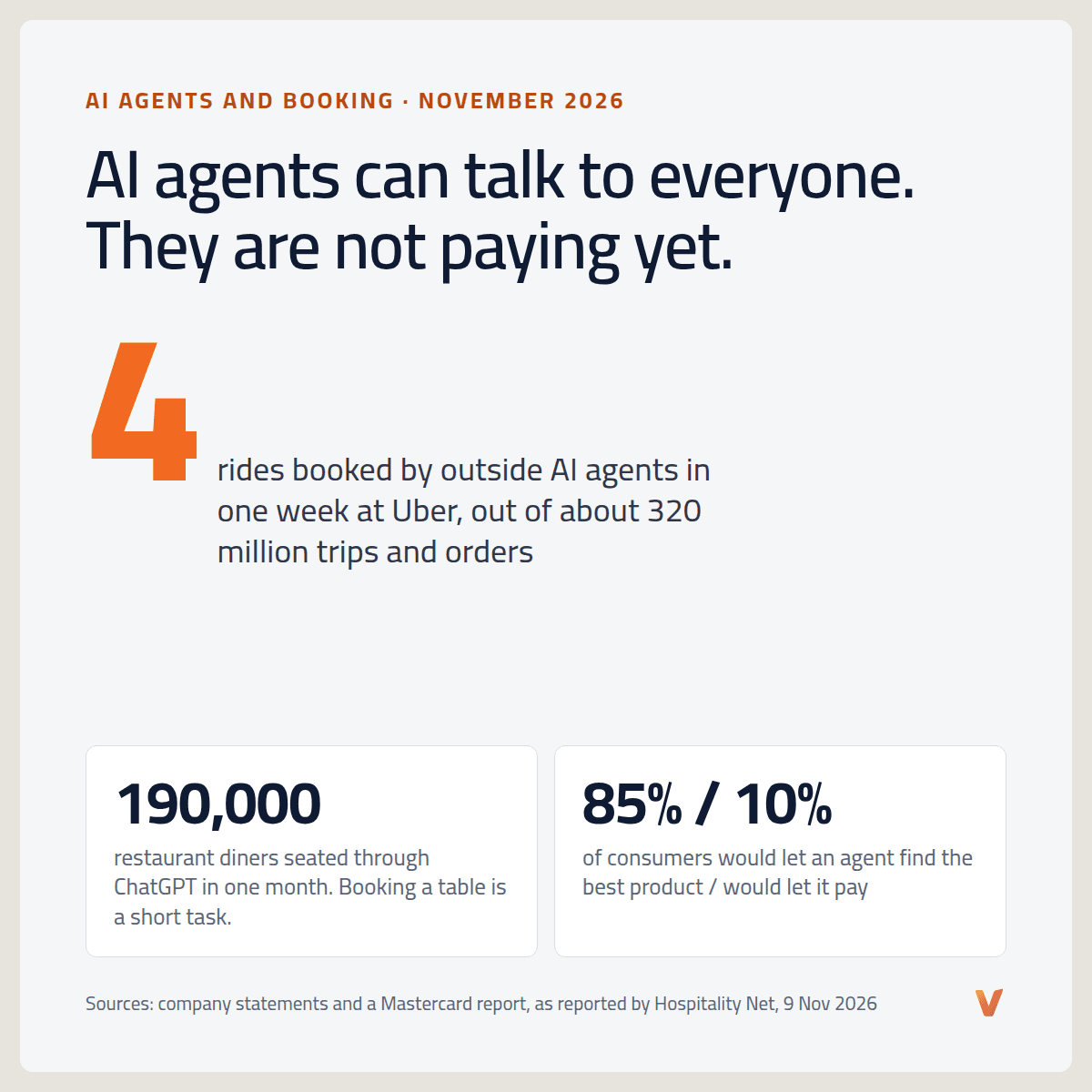
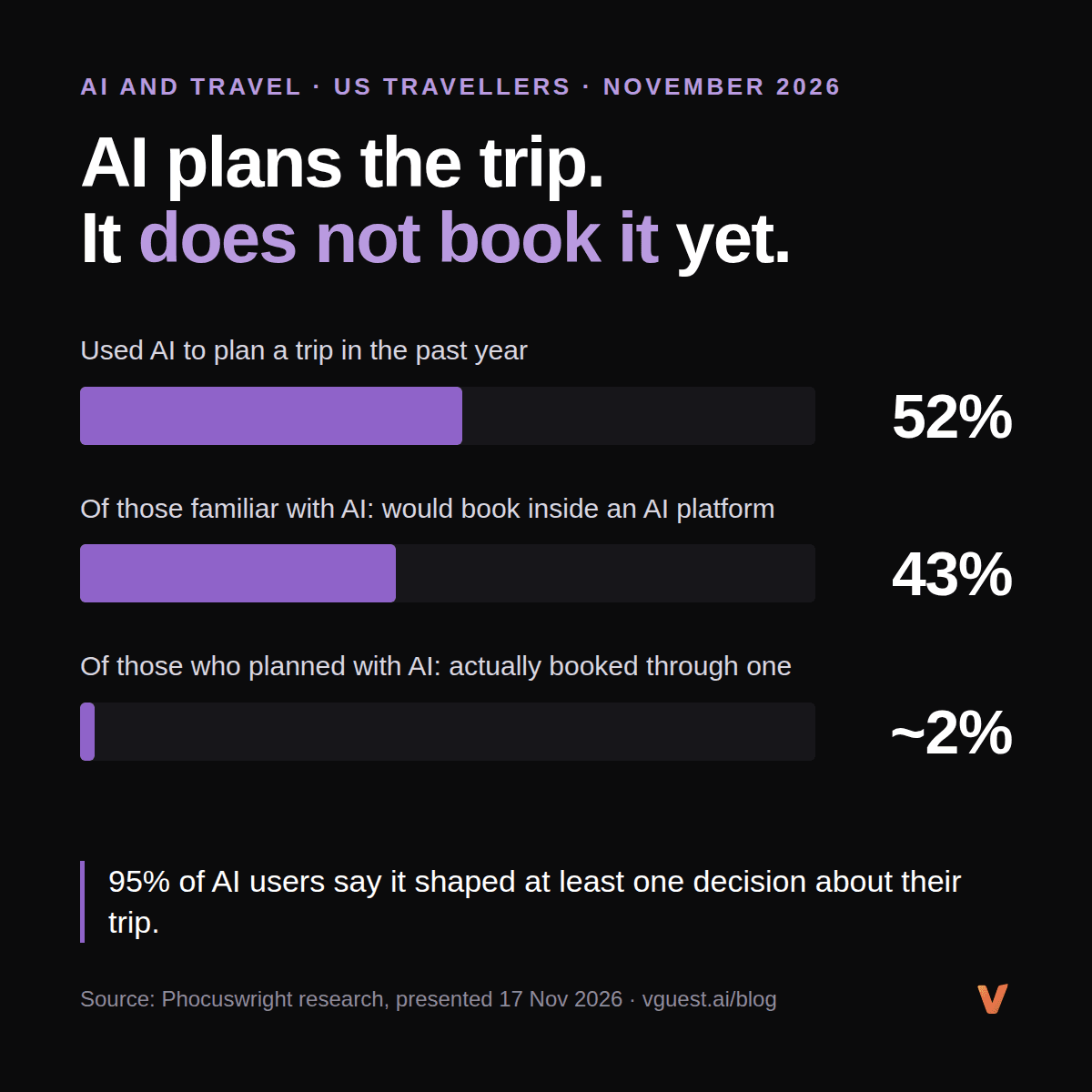
Agents find the guest. They rarely book yet. In their November results, Booking Holdings put AI referrals at "significantly less than 1%" of Booking.com's room nights, and Airbnb called agent bookings "a very non-material number". Travellers are cautious too: in a Mastercard report cited in the same piece, 85% were open to an AI agent finding the best product, but only one in ten would let it complete the purchase alone (Hospitality Net, 9 November). Across industries, "the AI found the shopper and the merchant's own checkout made the sale" (Hospitality.today, 11 November).
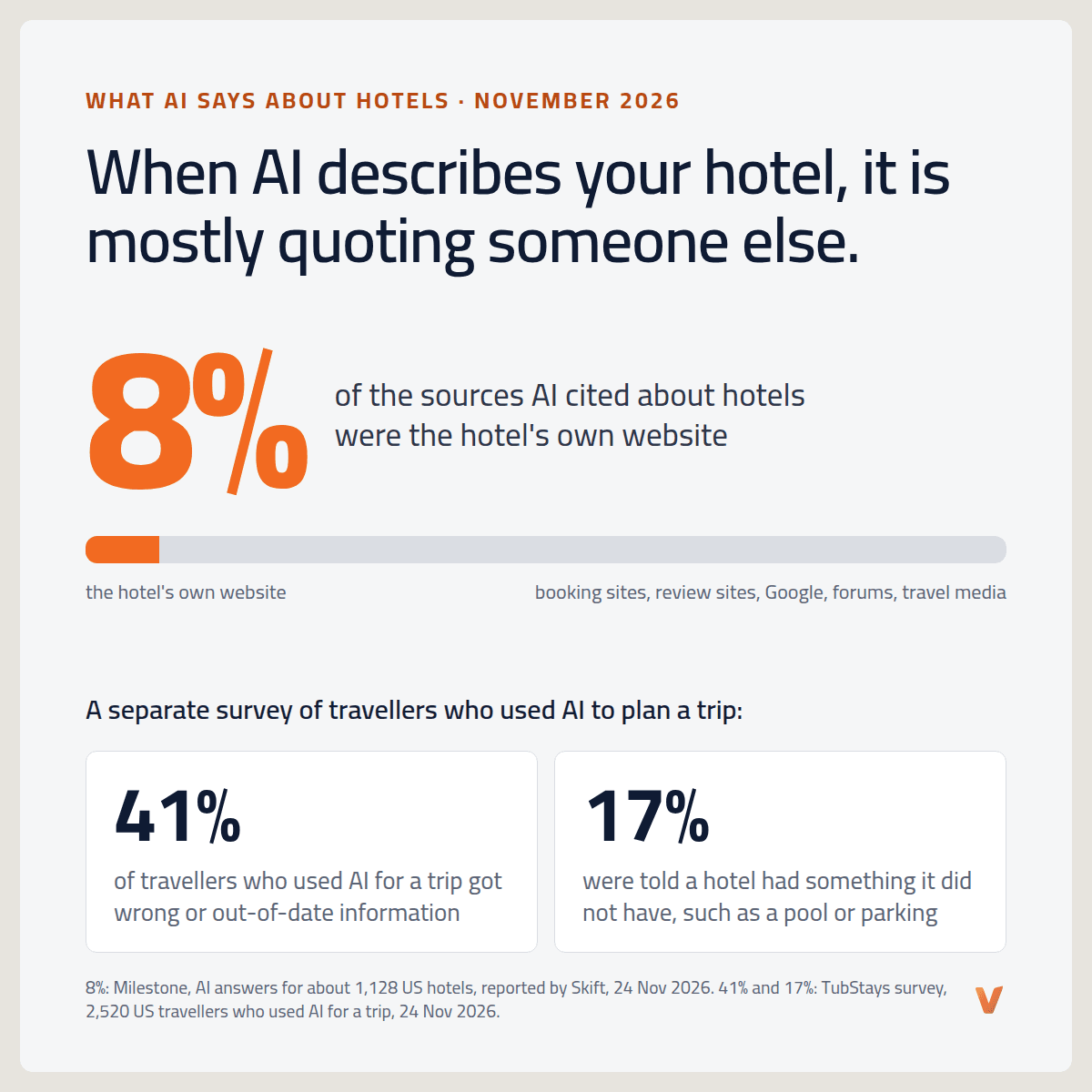
Agents learn about you from everyone except you. In an analysis of AI answers about roughly 1,128 US hotels and resorts, the hotels' own websites made up only 8% of the sources the AI cited (Skift, 24 November). The rest came from booking sites, review sites, Google, forums and travel media. If your facts are wrong there, the agent repeats them.
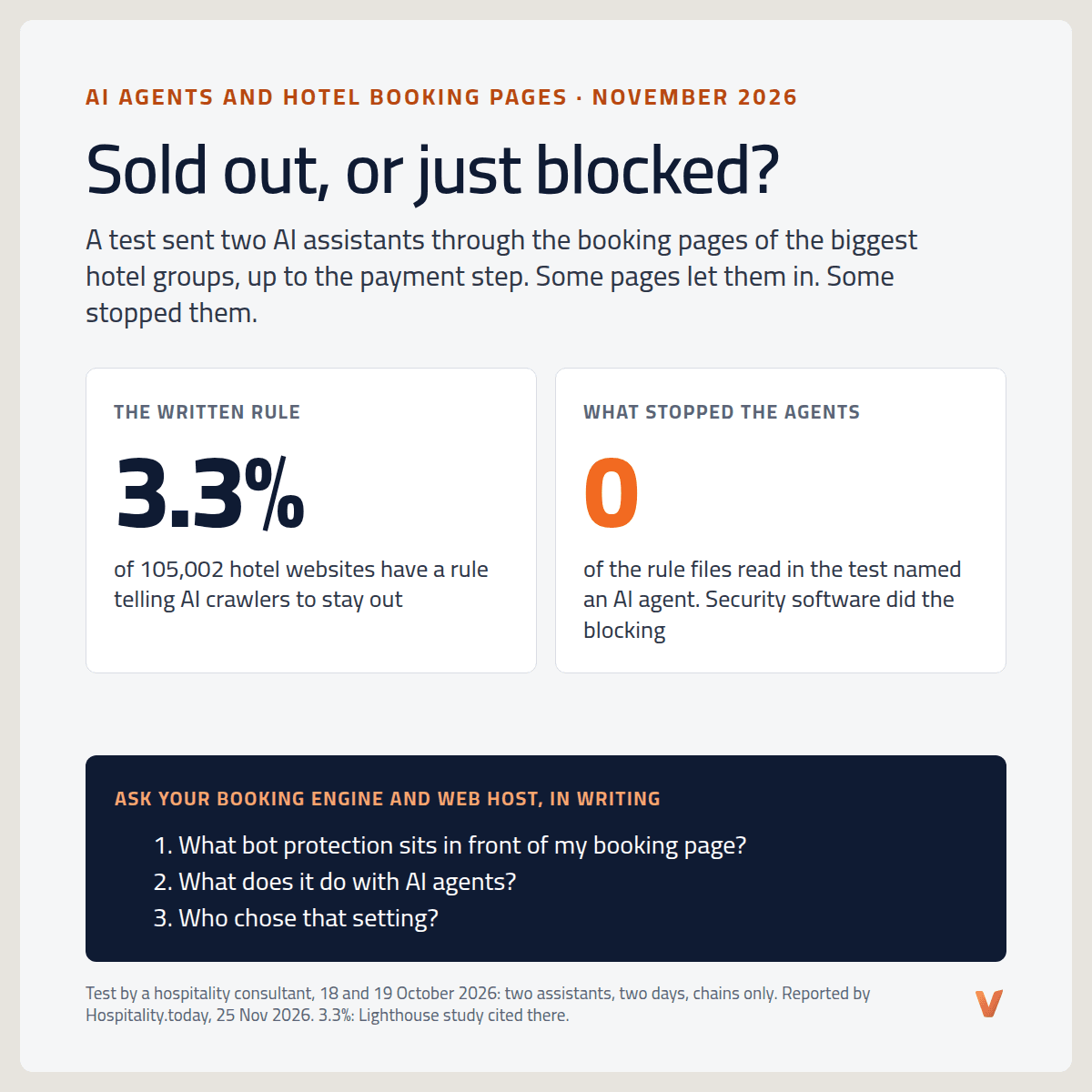
Some booking pages turn agents away without the hotel deciding to. A consultant sent two AI assistants through the booking pages of large hotel groups, stopping before payment. Some pages let them through every time; at one group, one assistant was stopped on every page. Bot protection software did the blocking, not a written rule: only 3.3% of 105,002 hotel websites have a rule against AI crawlers. And a blocked agent may simply tell the guest the hotel is sold out (Hospitality.today, 25 November).
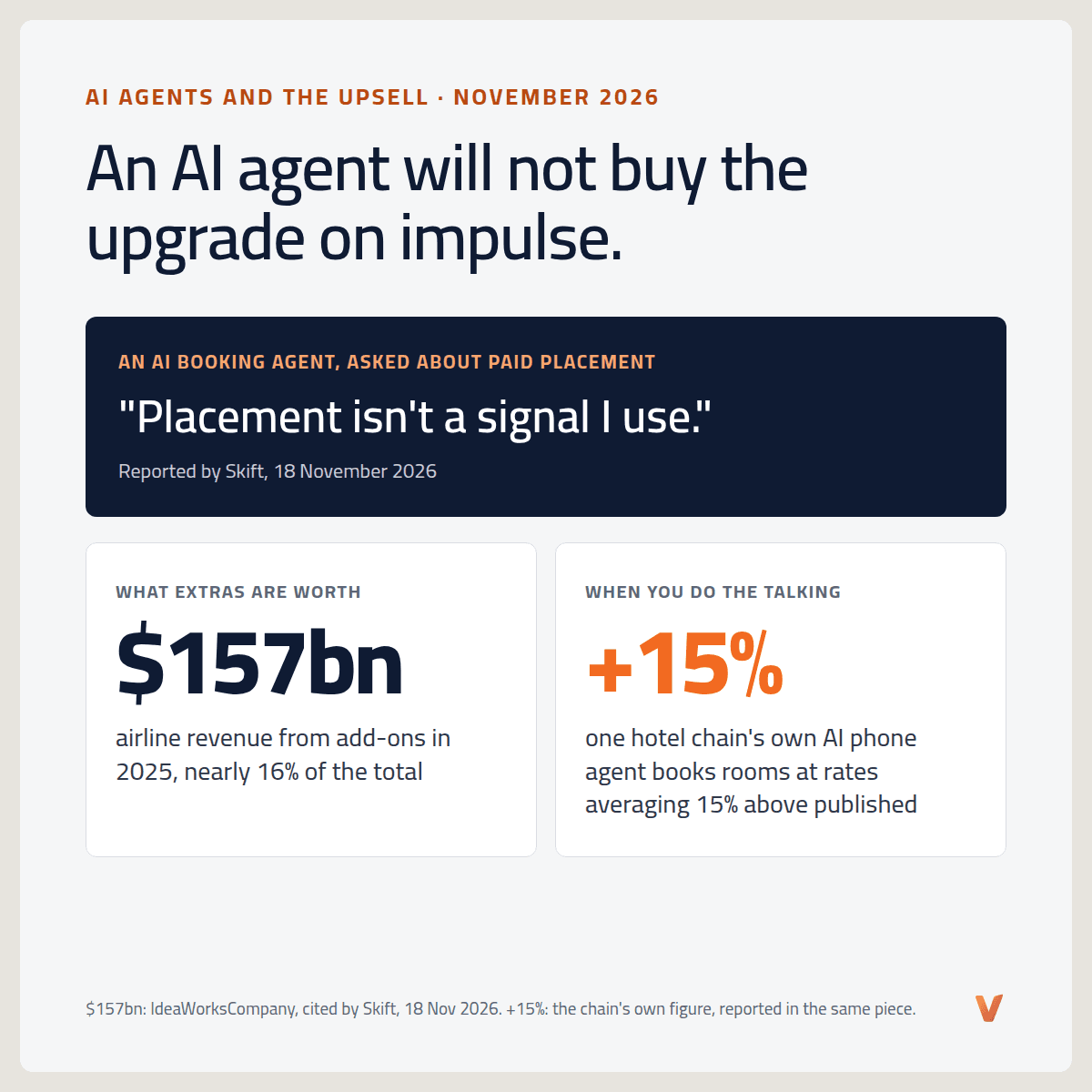
Agents skip the pitch, not the price. Asked whether paid placement shaped its picks, one AI booking agent answered: "Placement isn't a signal I use." That worries hotels that live on upsells, and one hotel owner said he wants to stop agents booking his hotels for that reason. But the same report notes that one hotel chain's own AI phone agent books rooms at rates averaging 15% above published (Skift, 18 November). Extras sell when they are clear, and when your own agent is in the conversation.
Hotels are putting agents to work too. One hotel system company reported that use of its connection for AI agents grew 70% between July and September 2026. Hotels use it to change reservations in bulk, forecast and manage rates (Hospitality Net, 28 October). The next step is the obvious one: the traveller's agent asking, and the hotel's agent answering.
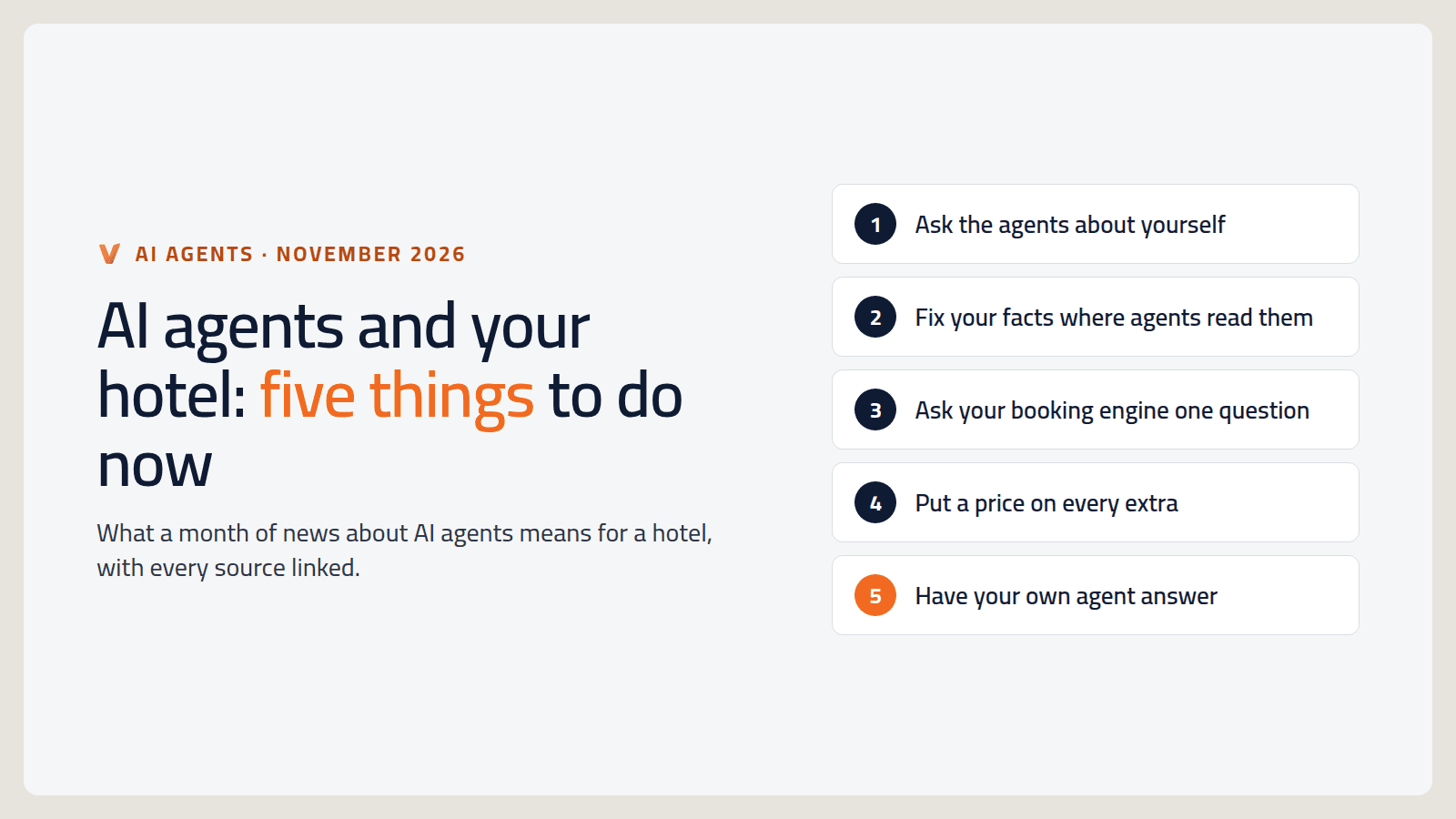
Five things to do this month
- Ask the agents about yourself. Ask ChatGPT, Google's AI Mode and one other assistant for a room at your hotel on a night you have availability. Note what is wrong, what rate it quotes, and whose button completes the booking.
- Fix your facts where agents read them. Your own site in plain text, not in a PDF or an image: parking, check-in times, pets, breakfast, what is included. Then the same facts on the booking sites and your Google profile.
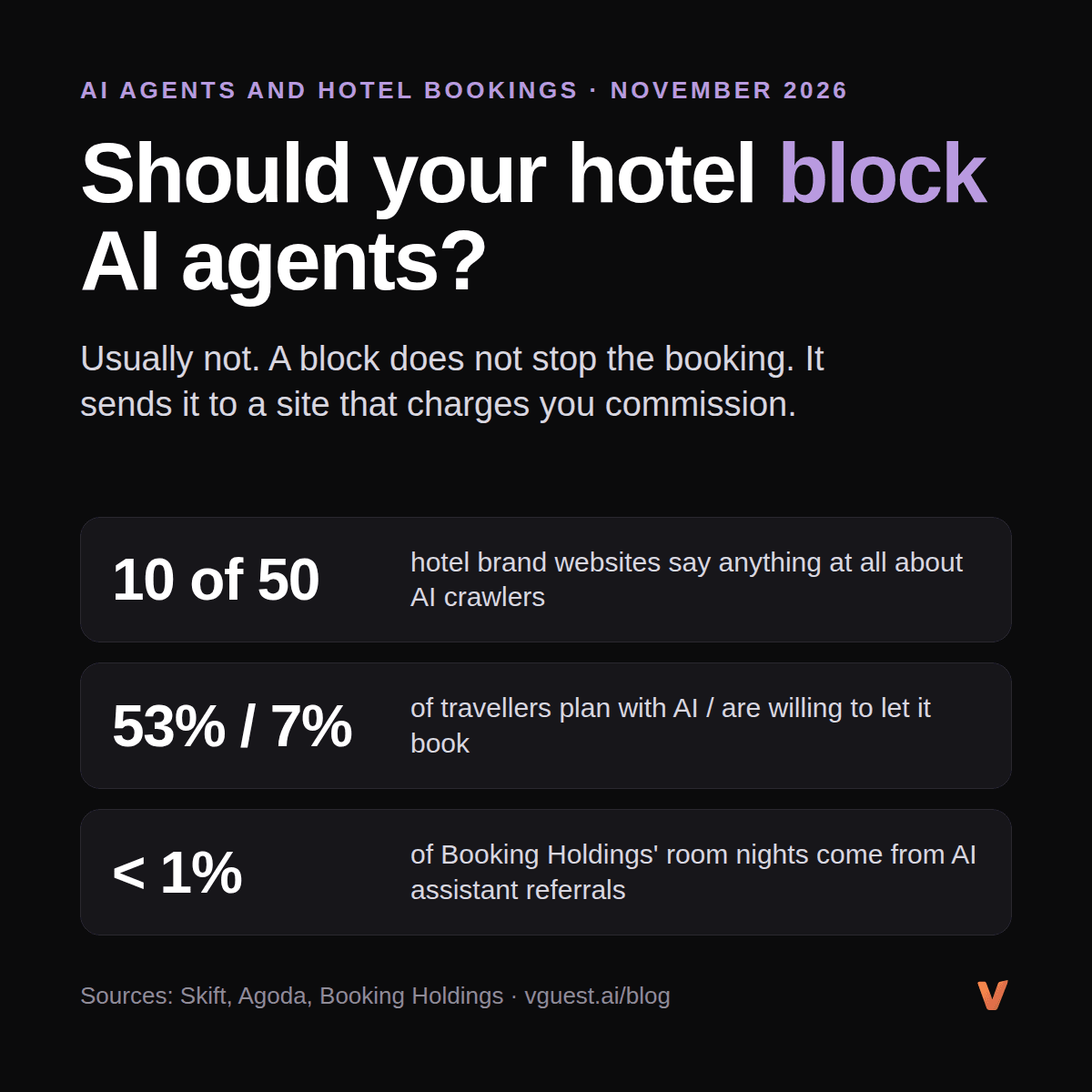
- Ask your booking engine one question, in writing. What does the bot protection on my booking page do with AI agents, and who chose that setting? Then decide on purpose. Should your hotel block AI agents? lays out both sides.
- Put a price on every extra. Breakfast, late check-out, the room with the view. In text, with a price. An agent can only offer what it can read.
- Have your own agent answer. When a traveller, or their agent, reaches you on your website or WhatsApp, the answer should come at once, from your facts, in their language, with your booking link.
You can try the last one today: build an assistant from your own website in a few minutes. It is free for 30 days, and nothing goes live until you approve it.
Common questions
Are AI agents booking hotel rooms yet?
Very few. In November 2026 Booking Holdings put AI referrals at significantly less than 1% of Booking.com's room nights, and Airbnb called agent bookings a very non-material number. Agents mostly search and compare; the booking still happens on a website.
Where does an AI agent get its information about my hotel?
Mostly from other websites. In one analysis of AI answers about roughly 1,128 US hotels and resorts, the hotels' own websites were only 8% of the sources cited. Booking sites, review sites, Google, forums and travel media made up the rest.
Can my booking page block AI agents without me knowing?
Yes. In a test of large hotel groups' booking pages, bot protection software stopped some AI assistants even though almost no hotel website has a written rule against them. A blocked agent may tell the guest the hotel is sold out. Ask your booking engine and web host what their protection does with AI agents.
Do AI agents skip upsells?
They skip the sales pitch, not the facts. An agent can offer breakfast, a late check-out or a better room if the extra is written on your site with a price.