Changing what your AI knows, without breaking what it already gets right
A hotel AI is not set up once. It is taught, like a new employee who never leaves, and most of that teaching happens after launch, while the assistant is talking to guests.
 vGuest
The front desk, housekeeping and the back office — where the work actually happens, and how it changes when the messaging stops being manual.
39 articles
A hotel AI is not set up once. It is taught, like a new employee who never leaves, and most of that teaching happens after launch, while the assistant is talking to guests.
Ask any front desk which calls came in this morning. The answer is nearly always the same four: check-in time, parking, directions, and "do you have a room this weekend?"
Many hotels run WhatsApp from a handset at reception. It works. It works right up until the morning in high season when the number is restricted, and the channel through which…
In many hotels a guest request travels like this: the guest calls reception, reception writes it in a staff WhatsApp group.
Every hotel that puts AI on its chat has to answer one question before anything else: when should the assistant stop selling and call a person?
The FAQ is the easy part of a hotel AI project, and it is also the part your guests could already find.
You have built a good WhatsApp operation, and a large share of your guests are never in that channel at all, because you do not hold their number.
Business guests and leisure guests need different messages: the same hotel, the same room, two different journeys.
At 50 rooms the hard part of guest messaging is not the volume. It is that nobody is awake at 2am, and most software is not sold to fix that.
"I have a voucher, how do I use it?" is one of the most common and least automated questions a hotel or spa gets.
Online check-in saves the desk minutes per guest, but only for guests who finish it. Knowing where they stop is the whole job.
A water park's phone rings because the same ten questions are asked by people who are already on their way: is it open if it rains, which slides are closed, is my ticket valid…

Ask a reservations manager what their team does all day and you will get a considered answer about service, upselling and problem-solving. Ask them what their team actually types…

There is a moment in most implementations where an operator stalls. They have been shown a configuration screen, or a list of prompts, or a settings page, and they are trying to…

Digital check-in is sold on the pleasant parts - the guest arrives, their room is ready, nobody queues. When it fails, it almost never fails there. It fails on a file upload, a…

Every deployment reaches the same question at roughly the same point in onboarding. The knowledge base is populated, the tone is right, the common questions are answered. Then the…

Hotel technology runs on other people's systems. The PMS, the payment gateway, the channel manager, the door locks, the booking engine - at some point every one of them will do…

Operators running more than one site hit a structural question early, and it is worth answering deliberately rather than accepting whatever default appears first.

There is a particular kind of bug that costs hotels more time than it should. The integration works. It has worked for months at four other properties on the same PMS, running the…

A hotel asked us to remove one field from its payment form. The reason was plain: guests do not understand what this is.

The question most operators ask early in an implementation is some version of what do you need from us? It is a good question, and the honest answer surprises people: very little…

An AI assistant is accurate on the day it launches. That is the last day anyone can take its accuracy for granted.

The phrase "hotel AI assistant" describes two products that share a demo and almost nothing else. Buying the wrong one is the most common expensive mistake in this category, and…

The hotels most likely to switch guest messaging providers are the ones who have learned what matters by living with the wrong product. This is for them, and it starts with the…

A pilot is not a trial of the software. It is a trial of whether your property can run it. Most pilots that fail do so for reasons that were decided before the first guest message.

The survey figure doing the rounds in hospitality this year is that around one in ten industry leaders feels prepared for AI. Nine in ten do not.
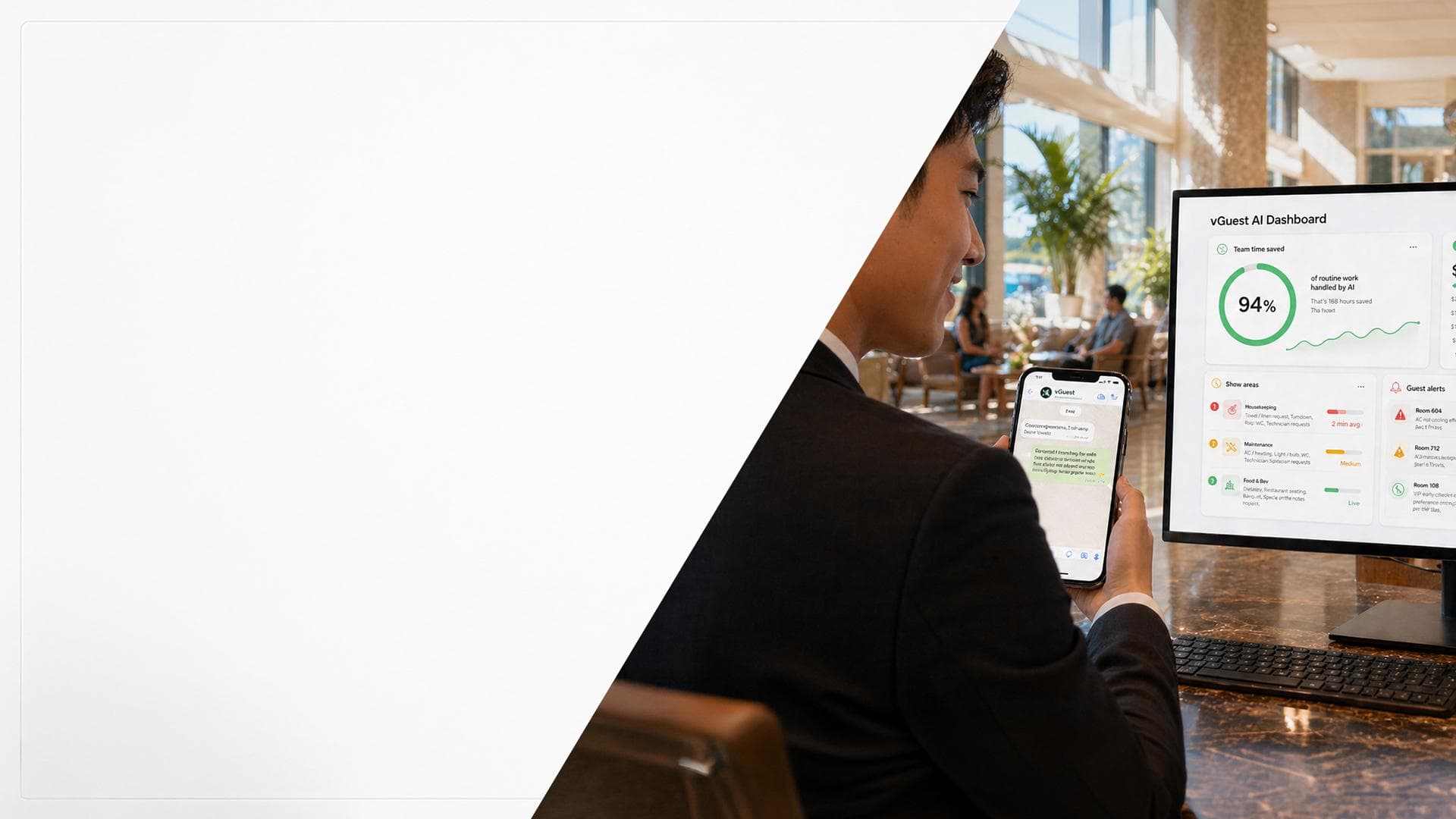
Every guest messaging dashboard leads with response time. It is easy to measure, it always improves when you deploy an assistant, and it is almost useless for deciding whether the…

The most important configuration decision in a guest messaging deployment is not what the assistant answers. It is what it must never answer on its own. Most properties skip the…
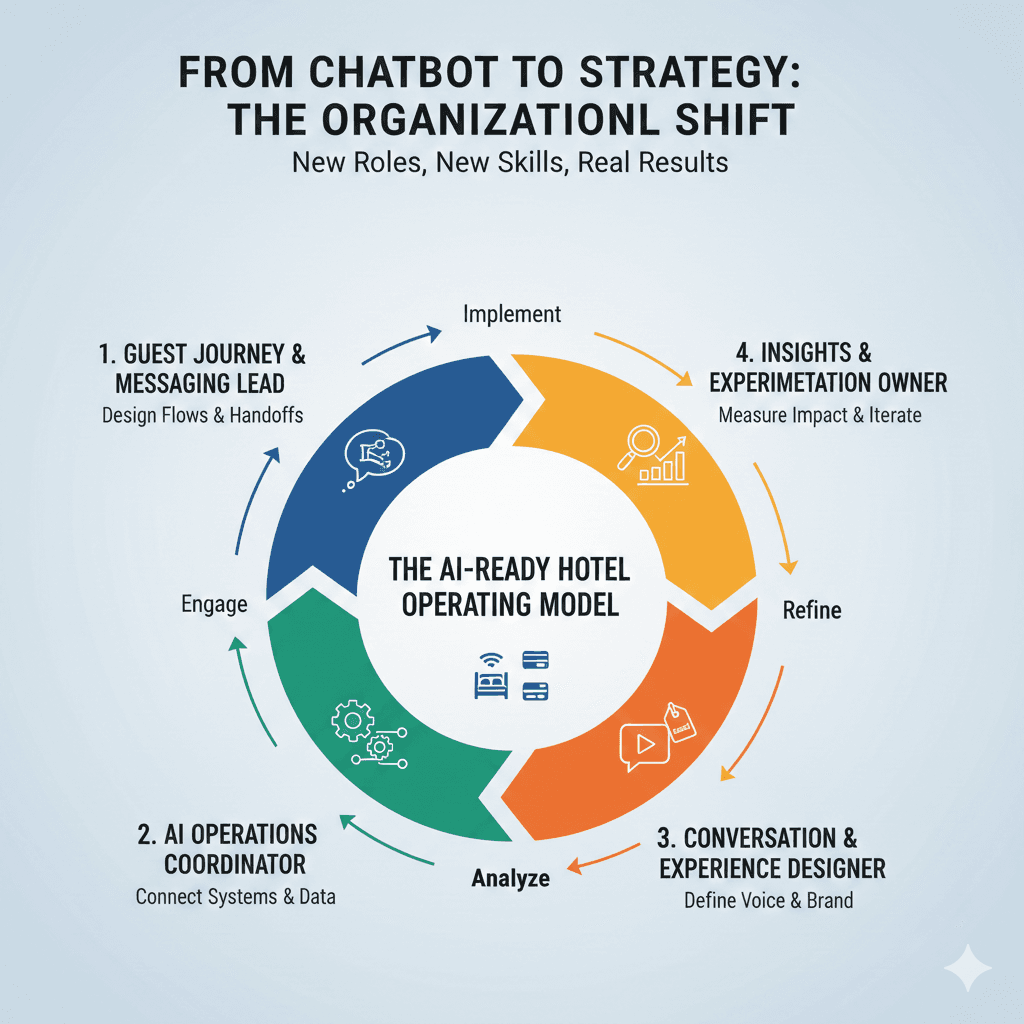
Walk into most hotels that “use AI” today and you’ll see a familiar pattern.

You’re on the phone with a frequent guest. She’s halfway through asking for a late checkout and then says:

If you’ve sat through a technology pitch in the last 12 months, you’ve probably heard some mix of:

How modern hotels are redefining efficiency—from data-driven operations to intelligent automation—to maximize profitability and resilience.

Automation has become a cornerstone of modern hotel operations. From self-check-in kiosks to automated guest messaging, systems now handle tasks that once required people. The…

Real-time guest feedback is anything a guest tells you while they are still on the property: a reply to a short check-in message, a complaint in a WhatsApp thread, a request that…
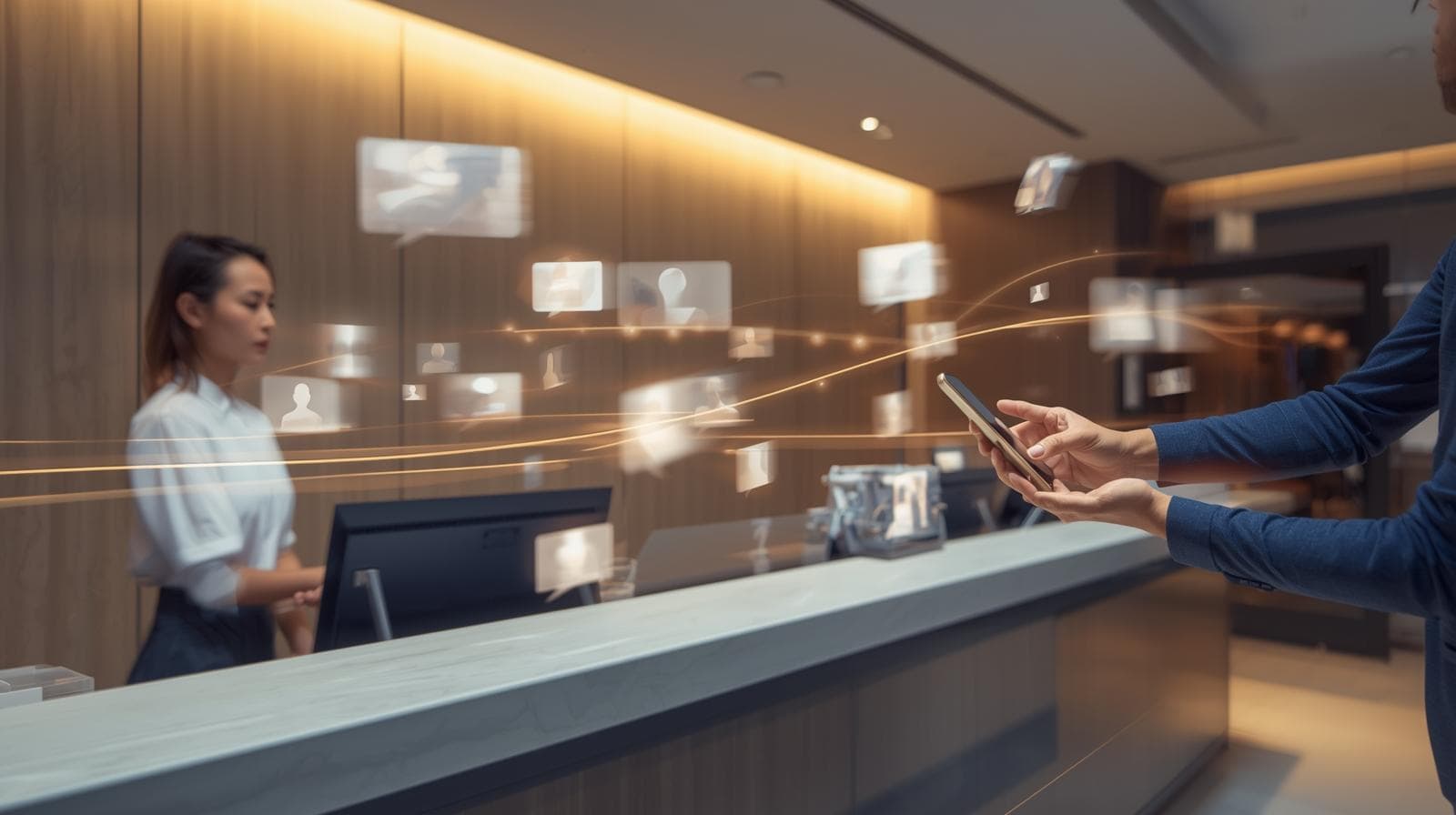
In hospitality, communication isn’t a side task — it’s the heartbeat of the entire guest experience. Every message, every reply, every delay shapes how guests perceive care…

Every hotel starts the same way — looking for a Property Management System that makes life easier. At first, it does. Bookings sync. Reports make sense. Operations flow together…

Artificial intelligence is changing the rhythm of hotel operations. Guest messaging, pricing, housekeeping, even upselling — all are now guided by algorithms that promise speed…

In modern hospitality, data is everywhere. From PMS dashboards to guest sentiment trackers, hotel teams are surrounded by metrics that promise clarity — but often deliver…
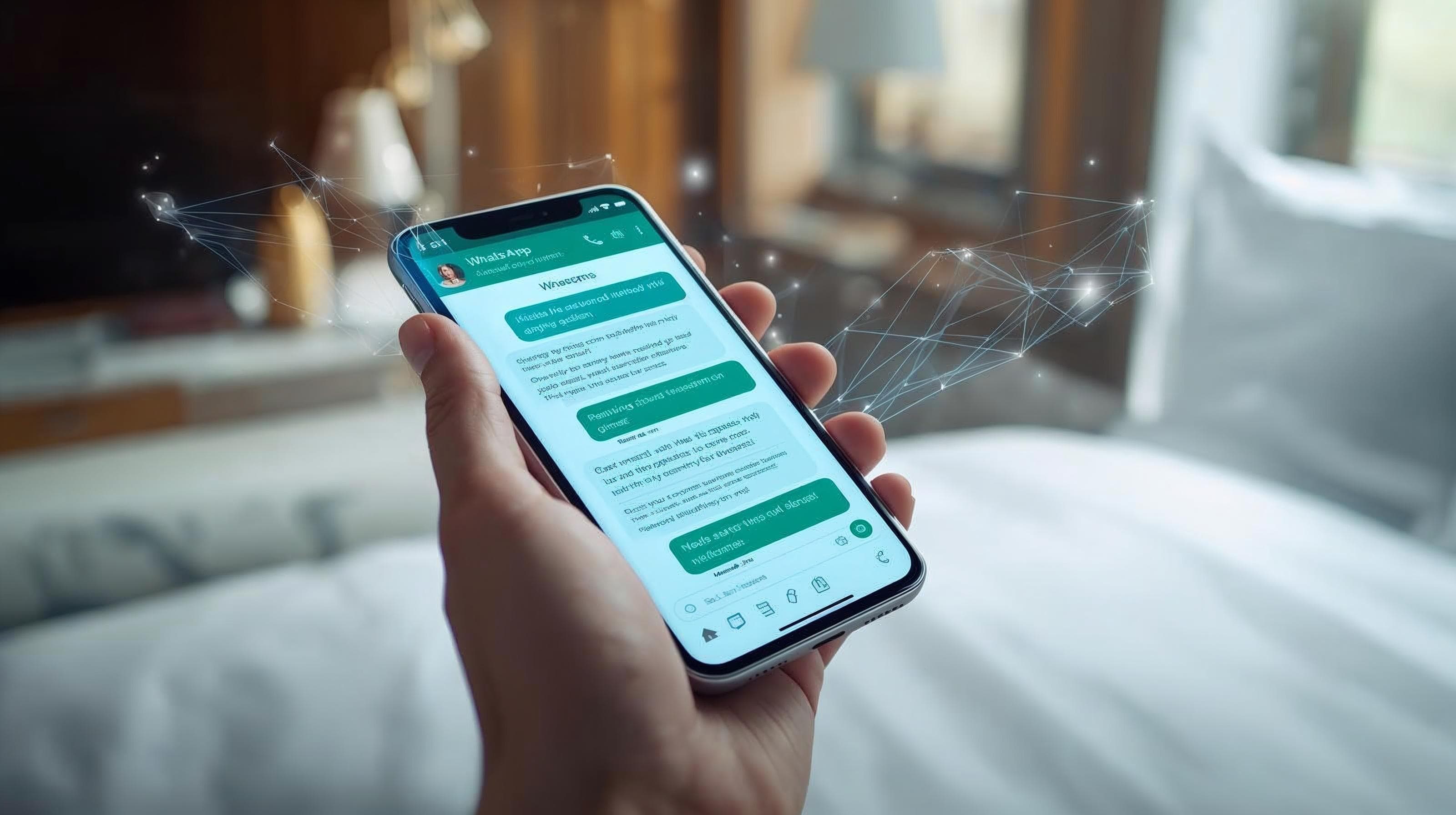
WhatsApp is where hotel guests already send their questions, so hotel WhatsApp messaging works when it is run like any other part of operations: one inbox, a named owner on every…
Bring your own property. We will show you what the assistant does with your real questions, in your languages, on WhatsApp.
Running at 190+ properties in 6 countries