Guest messaging is an operations channel, not a chat widget: what guests actually use, what to automate, when a person takes over, and how to tell whether it is working.
73 articles
The guide8 min read
Guest messaging platforms look much the same in a demo. They differ in what happens after the message arrives: how much gets answered without anyone typing, who picks up the rest and how fast, whether the system can read and write your booking data, and what it lets you measure afterwards. Those four things decide the result, and none of them is a feature you can tick off a list.
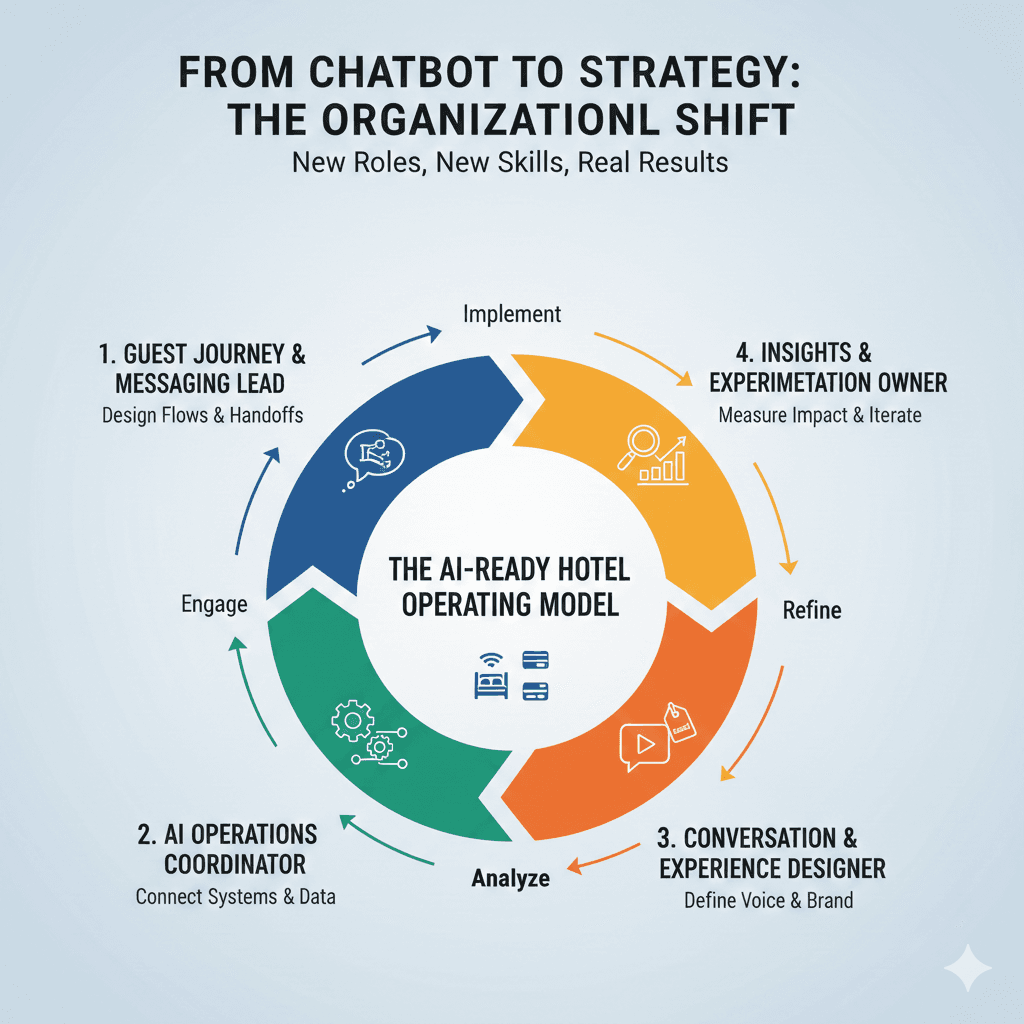
That is why this runs well only when a property treats it like any other part of operations: someone owns it, the rules for what gets automated are written down, and it is measured against money rather than speed. The technology is the easy half.
This is the high-level version of what we have written on the subject, drawn from running it across more than 190 properties. Each section links to the article that goes deeper.
Guests message on WhatsApp, so start there
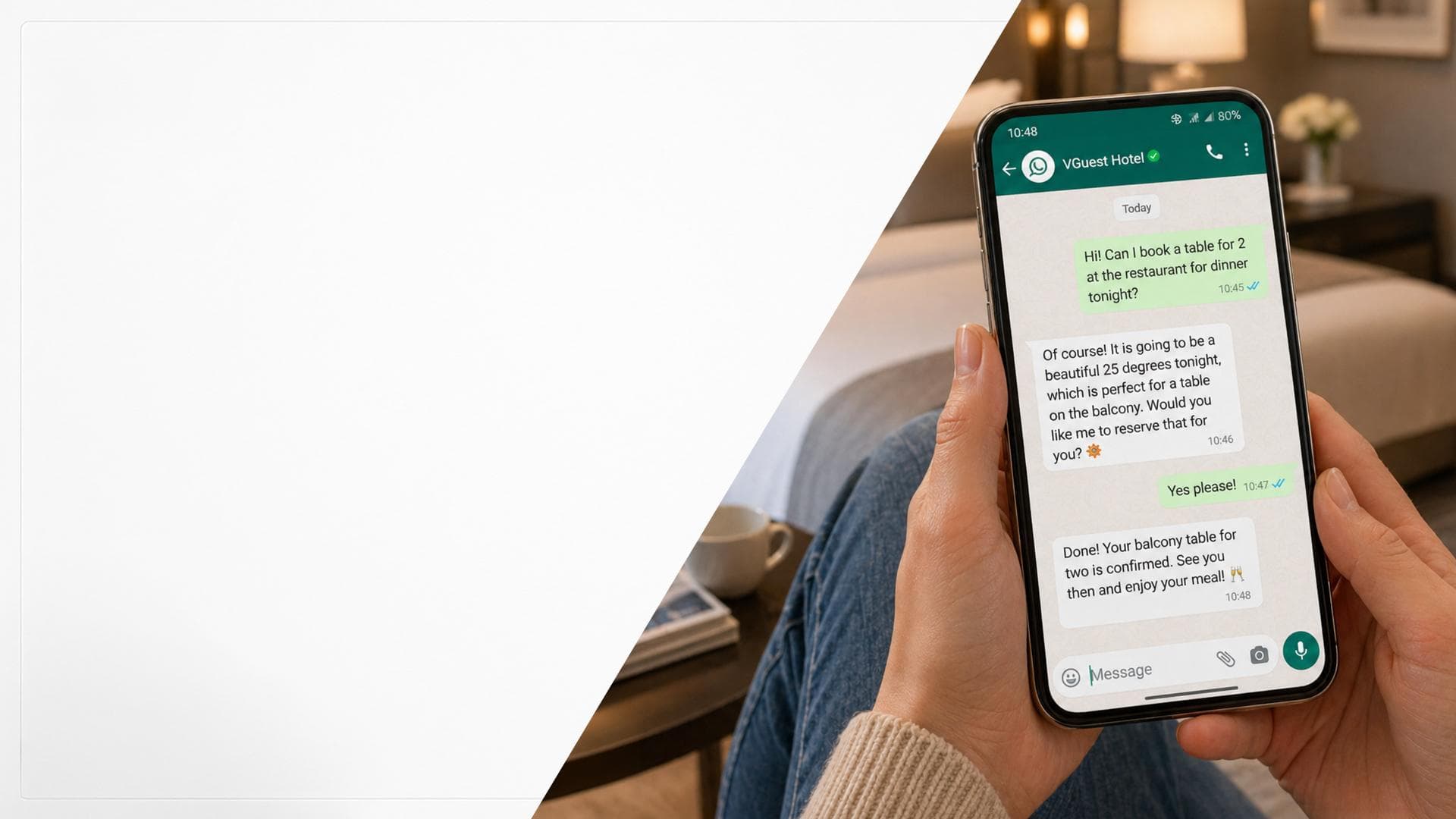
Across the 190+ properties vGuest works with, 97% of guest conversations arrive on WhatsApp. Instagram, Messenger, Telegram and web chat matter, but they are the long tail. A messaging plan that treats WhatsApp as one channel among five is planning for the demo rather than for the guests.
Guests also do not write the way a form expects. They send voice notes, and they write in languages nobody on the night shift speaks. Voice Notes and Languages You Do Not Speak is about handling both without a scramble at 9pm.
Ask a team what it does all day and the answer is about service. Look at what it actually types and the list is short and repetitive: parking, check-in times, opening hours, availability, the same questions dozens of times a day.
The decision that matters is what the assistant must not answer
The most important configuration choice is not what the assistant answers. It is what it must never answer on its own: group bookings, accessibility, complaints with money attached, anything where the words understate what is being asked. The incident that ends a deployment is almost always on that list.
Complaints deserve their own handling, because they are the highest-signal messages a property receives and the easiest to bury. The 2025 Guest Whisperer is about turning them into recovery rather than a review.
Messaging is only as good as the systems it can read
A reply about availability is only as reliable as the source behind it. A manually typed list drifts from the day it is written, fastest when accuracy matters most. The answer is to read the system of record, not a copy of it.
Can the Bot Just Check the Calendar? covers this for attractions, which ask a different first question than hotels do. For hotels the system of record is the PMS. vGuest connects to Optima, EzGo and MiniHotel, and to Mews, Cloudbeds, Guesty and SimpleBooking, and the integration has to write back as well as read.
Every messaging dashboard leads with response time. It is easy to measure, it always improves when an assistant goes live, and it says almost nothing about whether the deployment was worth it.
Before any of that, a trial has to prove something. A pilot is not a trial of the software; it is a trial of whether the property can run it. What a 90-Day Guest Messaging Pilot Should Prove sets out what to decide before the first guest message.
What it costs
Three costs sit under guest messaging, and none of them is the number on a pricing page.
The first is the platform. Tier names like Starter and Professional rarely describe what drives the price, which is usually volume, channels and integration work. Hotel Chatbot Pricing explains what actually sets it.
The second is the channel itself. Meta bills WhatsApp business messages individually, and from 1 October 2026 service replies and utility messages inside the 24-hour window stop being free, according to Meta's pricing documentation (read 13 September 2026). Budget per message, and check the current rate card for your guests' countries; the WhatsApp pricing calculator for hotels does that arithmetic by guest country.
A growing share of requests will not be typed by the guest. They will be sent by the guest's own assistant, precise and several questions at once: early check-in, parking, the pet policy, a spa slot. Your Guest's AI Will Message You Before They Do sets out the shift, and Answering an AI Agent covers what the messaging has to handle when it happens. Some of those trips are now booked inside the assistant itself: Google AI Mode now books hotels covers who the guest contacts afterwards, which is still the property.
Those assistants read the property before they write. Your Rooms Rank. Your Policies Do Not. is about the answerable questions, such as dogs, cancellation and parking, that most hotel sites leave unanswered. The AI Protocol Shift argues for treating machine-readable guest information as operations rather than marketing.
Where to start
Spend one week counting the questions your team answers by message and by phone, and write down the requests the assistant must never answer on its own. Those two lists decide most of what follows: what to automate, what to route to a person, and what to measure. They are also the best brief any vendor will receive from you.