Hotel technology decisions are unusually hard to reverse. A PMS migration is measured in months, a channel manager switch is measured in nervous weekends, and the cost of getting it wrong is not the licence fee — it is the two years you spend working around it.
This is the high-level view of what we have written about choosing, connecting and living with a hotel tech stack, with links to the pieces that go deeper.
Start with the system of record
Everything else in your stack is downstream of the PMS. It holds the reservation, the guest profile and the room state, and if it will not share those cleanly then nothing you bolt on can be much good.
Two questions decide most of it. Can you get your data out? And does it have a real API, or an export? An export is not an integration.
When Your PMS Becomes the Problem is about recognising the point where working around it costs more than replacing it — which most properties reach well before they admit it.
Modular or unified
The real architectural choice: one vendor covering most functions, or best-of-breed components you connect yourself.
Unified is simpler to buy, simpler to support, and you get one throat to choke. You also inherit that vendor's weakest module and their roadmap. Modular gives you the best tool per job and the freedom to replace one piece, at the cost of owning the integrations and the finger-pointing when something breaks between two systems.
There is no general answer, but there is a good rule: be modular where the market is moving fast, unified where it is not. Optima (Priority) vs EZGO: Modular vs Unified Stack works this through with two real systems.
Size changes the answer
Advice written for a 400-room group is actively harmful to a 24-room boutique. A small property's binding constraint is not budget, it is that nobody has a spare day a week to administer anything.
How to Pick the Right Tech Stack for a Small Hotel or Boutique Property is written for that constraint. Beyond Check-In covers how the same tools land differently across resorts, city hotels and boutiques.
Buying AI without buying a story
"AI" covers at least four different families of model with different data needs, risks and returns. Knowing which one a vendor is actually selling is the difference between a defensible purchase and a subscription.
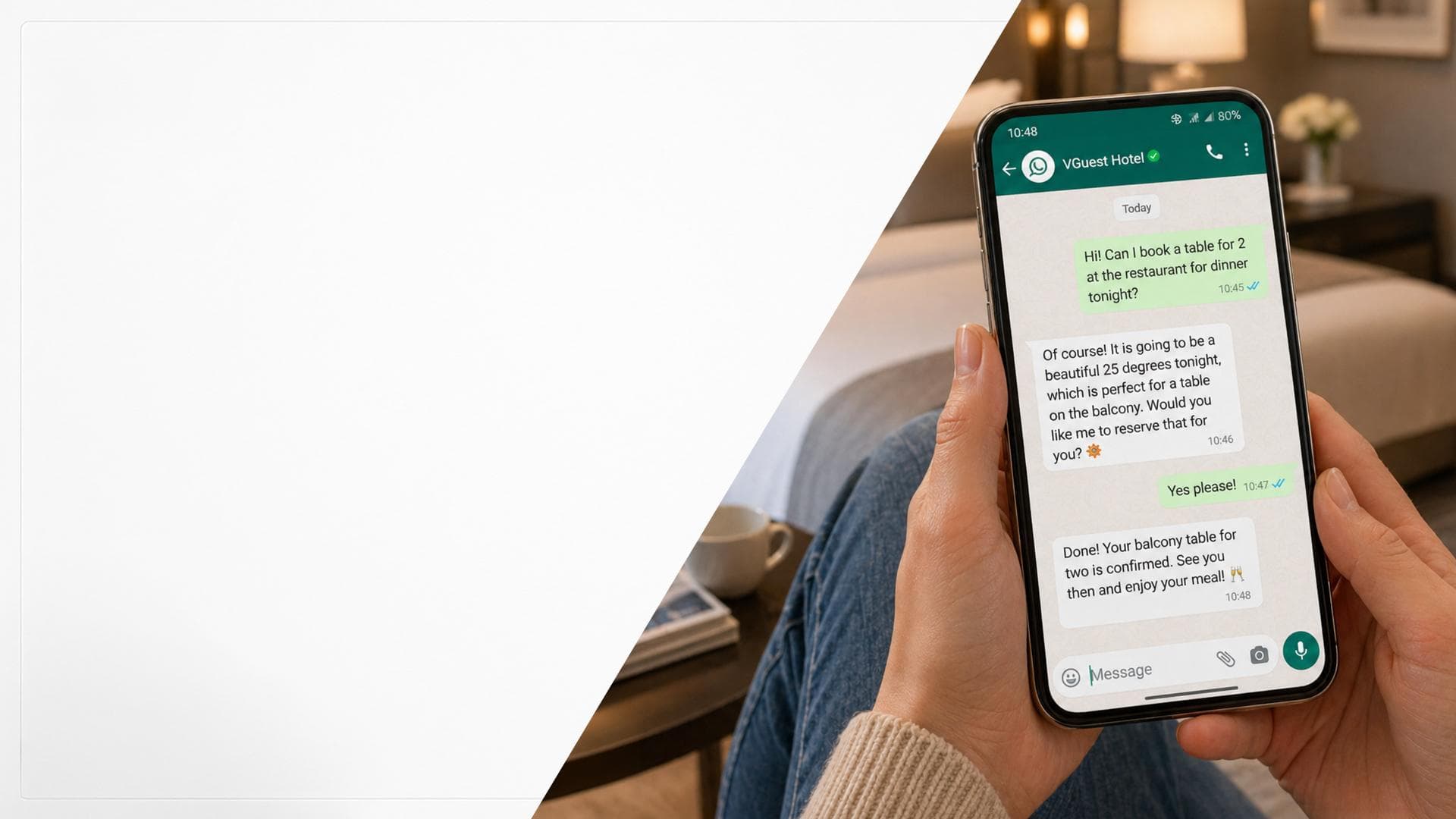
Not all "Hotel AI" is created equal is the breakdown — and the Hotel AI guide is the fuller version of that subject. From Scripted Bots to Smart Assistants covers why the previous generation of hotel chatbots damaged trust in the whole category.
The single best question in any demo: what does it do when it does not know?
What it is supposed to pay for
Technology that does not show up in operations or the P&L is a hobby.
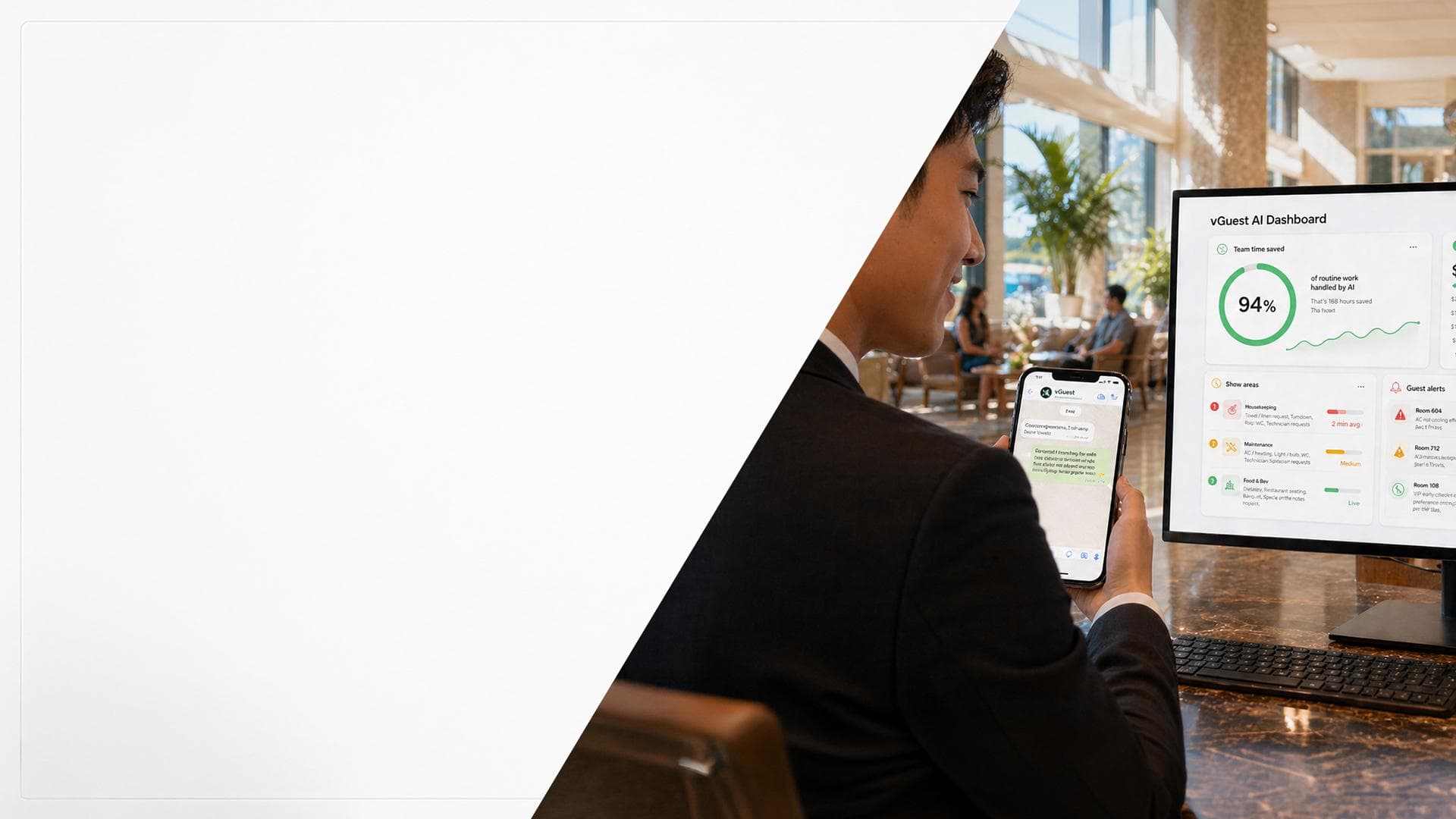
The New Efficiency Imperative covers turning operations into something measurable. The Hidden Cost of Friction covers what the current state is costing before you change anything. From OTA Dependence to Direct Bookings and Micro-Upsells and Timing cover the two clearest revenue paths.
The Metrics That Actually Matter is the one to read before you agree a success measure with a vendor, because the metrics they propose tend to be the ones their product moves.
Data you can act on
Collecting guest data is easy and mostly useless. The value is in acting inside the stay, while it still changes the outcome.
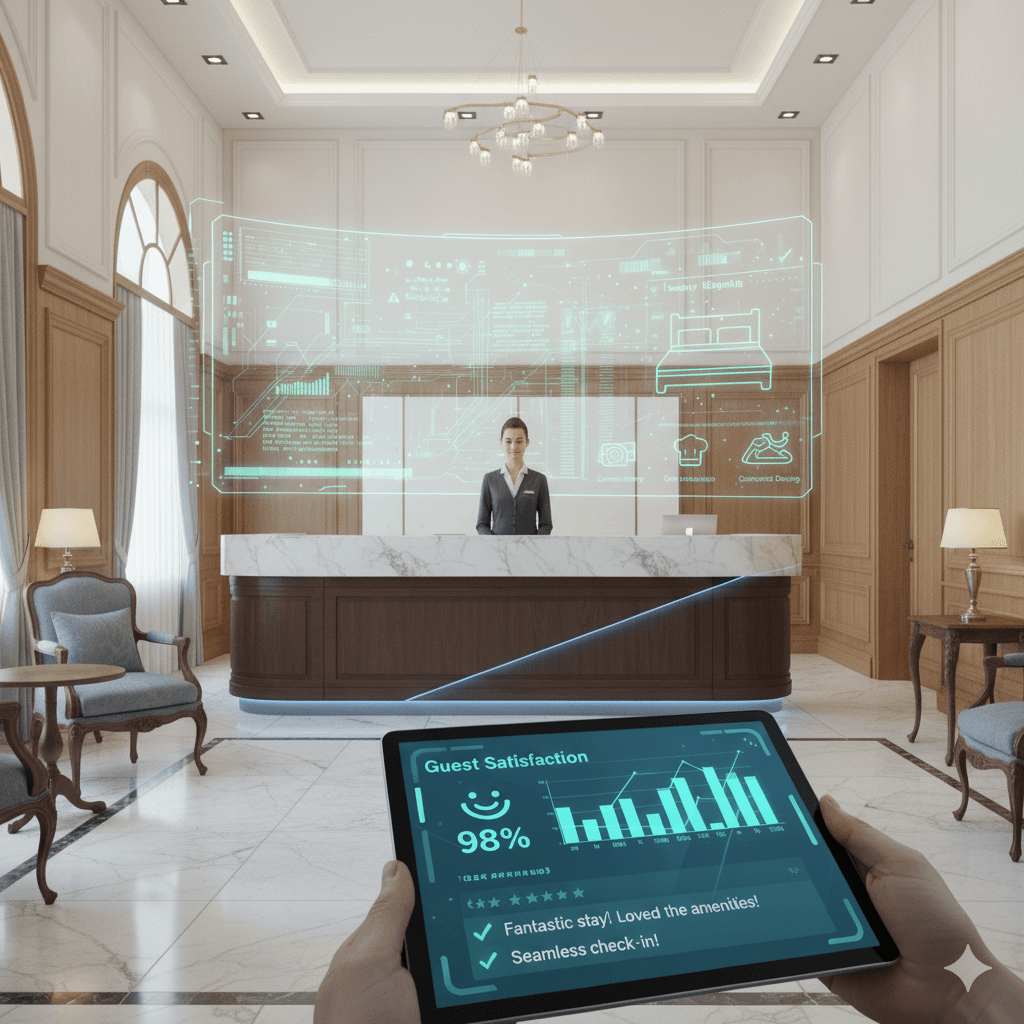
The Predictive Hotel and Predictive Hospitality cover forecasting; Understanding Guests in Real Time and Sentiment Analysis and Guest Reviews cover feedback; Proactive Hospitality covers doing something with it.
Nobody is coming to run it
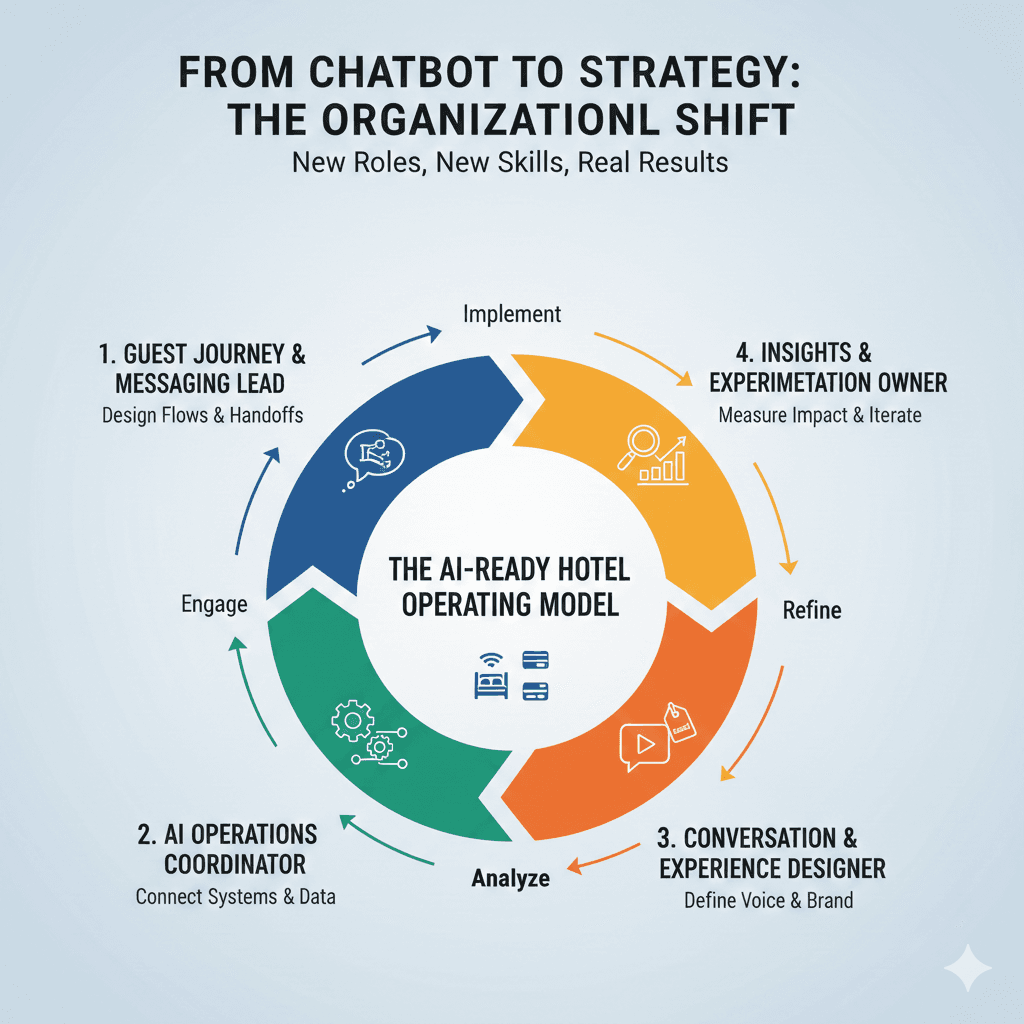
The failure mode is buying capability and not staffing it. Someone owns the knowledge base. Someone watches escalations. Someone decides what the system may say.
The AI-Ready Hotel Org Chart covers the roles. When Automation Goes Too Far and Hospitality in the Age of AI cover the limits worth setting deliberately, before a guest finds them for you. The Most Human Hotel Assistant Isn't Human at All puts the other side.
What is changing next
Guest-facing information is increasingly read by machines before people — an assistant answering "does this hotel have parking" without anyone visiting your site. That makes structured, machine-readable content an operational concern rather than a marketing one.
The AI Protocol Shift is the argument for acting on that now, while it is still cheap.
Where to start
Write down the three questions your team answers most often and trace where each answer lives. If any of them lives only in someone's head, that is your first project, and it is not a software purchase.